3D Printing Log Book KDP Interior: A Practical Tool for Creative Professionals
The 3D Printing Log Book KDP Interior is a specialized resource designed for individuals and businesses engaged in 3D printing, offering a structured format to document projects, track progress, and maintain records. This log book serves as both a practical tool and a professional asset, especially for those who publish or sell their work through platforms like Amazon KDP. Its design and functionality make it an appealing choice for creators looking to streamline their workflow and enhance the presentation of their 3D printing endeavors.
Key Features and Design
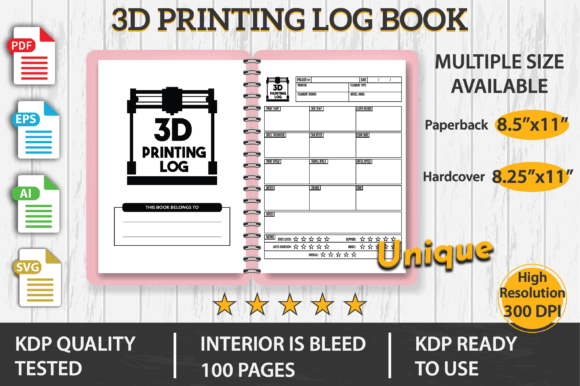
The 3D Printing Log Book KDP Interior is available in multiple dimensions, including 8.5 x 11 inches (21.59 x 27.94 cm) and 8.25 x 11 inches (20.95 x 27.94 cm), ensuring compatibility with a range of printing standards. With 100 pages, it provides ample space for detailed documentation, making it suitable for long-term use. The inclusion of bleed ensures that printed edges appear clean and professional, which is essential for high-quality publications.
The design of the log book is described as unique and professional, allowing users to customize content as needed. An editable source file is included in formats such as PDF, EPS, Ai, SVG, giving users the flexibility to modify layouts, add branding, or adjust content to suit specific needs. This level of customization enhances the log book’s versatility, enabling it to fit various creative workflows and business models.
Practical Use and Functionality
One of the primary purposes of the 3D Printing Log Book KDP Interior is to serve as a record-keeping tool for 3D printing projects. Whether used by hobbyists, entrepreneurs, or educators, this log book helps organize information about materials, design processes, print settings, and project milestones. For professionals who rely on consistent documentation, this structure can improve efficiency and reduce errors in future projects.
The log book also includes an intro page, which can be customized to reflect the user’s brand or project identity. This feature adds a personal touch and makes the document more engaging for readers or clients. Additionally, the PDF file is ready for upload to KDP, ensuring that users can seamlessly integrate the log book into their publishing process without technical complications.
Quality and Usability
The quality of the 3D Printing Log Book KDP Interior is evident in its print-ready design and tested compatibility with KDP. Users can expect consistent results when printing, reducing the risk of formatting issues or errors that could disrupt the final product. The professional layout and clear typography contribute to a polished appearance, which is essential for maintaining credibility in creative or business contexts.
Usability is another strong aspect of this resource. The 100-page format allows for thorough documentation without overwhelming the user. The ability to edit the source file means that users can adapt the log book to their specific needs, whether they are tracking multiple projects, creating templates, or integrating the log book into a larger publication.
Who Benefits Most from This Resource?
The 3D Printing Log Book KDP Interior is particularly beneficial for a variety of professionals and enthusiasts. Entrepreneurs who sell 3D-printed products can use it to maintain detailed records of their production process, which may be useful for inventory management, quality control, or customer communication. Educators and trainers might find it helpful for documenting lesson plans, student projects, or classroom activities related to 3D printing.
Freelancers and content creators who produce guides, tutorials, or instructional materials can also leverage this log book to organize their research and development process. For bloggers and publishers, the ability to customize the design and include an intro page makes it a valuable addition to a broader content strategy. Small business owners who rely on 3D printing for prototyping or manufacturing will appreciate the structured approach to project tracking and documentation.
Real-World Applications and Limitations
In real-world scenarios, the 3D Printing Log Book KDP Interior can be used to support a wide range of 3D printing activities. For example, a designer working on a series of custom parts might use the log book to note material choices, printer settings, and test results. A teacher using 3D printing in the classroom could track student progress, assign tasks, and document outcomes for assessment purposes.
However, it is important to consider potential limitations. While the log book offers flexibility through its editable source files, users with limited design experience may need additional guidance to fully utilize these features. Additionally, the focus on KDP compatibility may not appeal to all users, particularly those who distribute their work through other platforms or prefer digital-only solutions.
Recommendations and Final Thoughts
For individuals and businesses that require a structured, customizable, and professional log book for 3D printing projects, the 3D Printing Log Book KDP Interior is a solid choice. Its combination of practical features, ease of use, and compatibility with KDP makes it a valuable tool for anyone involved in 3D printing or related creative fields.
When considering whether this resource fits your needs, it’s worth evaluating your specific requirements for documentation, branding, and workflow. If you value consistency, reliability, and the ability to personalize your content, the 3D Printing Log Book KDP Interior could be a useful addition to your toolkit. As with any resource, testing it in your own workflow and assessing its impact on your projects will help determine its overall effectiveness.