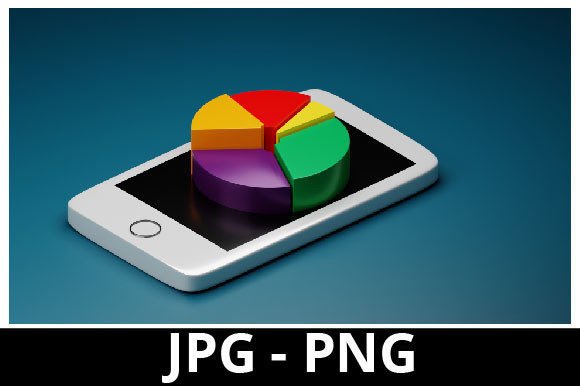
3d Rendered Pie Chart on a Smartphone Pe
When it comes to visualizing data, 3d rendered pie charts on a smartphone offer a modern and engaging way to present information. These graphics are not just visually appealing but also highly functional for users looking to communicate complex data in an accessible format. Whether you're a business professional, a student, or a designer, understanding how to use and benefit from these charts can make a significant difference in your work.
The 3d rendered pie chart on a smartphone pe is a digital asset that combines the clarity of a traditional pie chart with the depth and realism of 3d rendering. This makes it ideal for presentations, reports, and marketing materials where visual impact is key. The design elements such as color, texture, and perspective help draw attention and make the data more digestible at a glance.
Real-World Applications of 3d Rendered Pie Charts
One of the most common uses for 3d rendered pie charts on a smartphone is in business and finance. For example, a financial analyst might use this type of graphic to show the distribution of investment portfolios. By using a 3d pie chart, the analyst can highlight different segments with varying colors and levels of detail, making it easier for stakeholders to grasp the overall composition of their investments.
In the marketing industry, these charts are often used to represent market share, customer demographics, or sales performance. A marketing team could incorporate a 3d pie chart into a mobile presentation to illustrate how different products contribute to overall revenue. The 3d effect adds a layer of sophistication that can enhance the professionalism of the presentation.
For educators and students, 3d rendered pie charts on a smartphone can be a valuable teaching tool. In subjects like mathematics or economics, visual representations help students understand abstract concepts. A teacher might use a 3d pie chart to explain percentages or ratios, making the lesson more interactive and engaging.
Industries That Benefit from 3d Rendered Pie Charts
Several industries find value in using 3d rendered pie charts on a smartphone. In the technology sector, developers and product managers often use these visuals to track project progress or user engagement metrics. A mobile app developer might use a 3d pie chart to show how different features of an app are utilized by users, helping to identify areas for improvement.
The healthcare industry also benefits from these charts. Medical professionals can use them to visualize patient data, such as the distribution of diseases within a population or the effectiveness of treatment plans. The ability to view this data on a smartphone makes it easy to access and share during consultations or research discussions.
For entrepreneurs and small business owners, 3d rendered pie charts can be a powerful tool for tracking business performance. A restaurant owner might use a 3d pie chart to analyze sales by menu item, helping to determine which dishes are most popular and which need more promotion. This kind of insight can lead to better decision-making and improved profitability.
Practical Considerations When Using 3d Rendered Pie Charts
Before using a 3d rendered pie chart on a smartphone, it's important to consider the purpose of the visualization. Are you trying to simplify complex data, highlight key trends, or make a presentation more engaging? Understanding the goal will help you choose the right design and layout for your chart.
Another consideration is the audience. If the chart is intended for a general audience, simplicity and clarity should take precedence over intricate details. However, if the audience has a technical background, you may have more flexibility to include advanced features such as animations or interactive elements.
It's also essential to ensure that the chart is optimized for mobile viewing. Since many users will access the chart on a smartphone, the design should be responsive and easy to navigate. This includes ensuring that text is readable, colors are distinct, and the overall layout is clean and uncluttered.
Strengths and Limitations of 3d Rendered Pie Charts
One of the main strengths of 3d rendered pie charts is their ability to capture attention and convey information in a visually compelling way. The added depth and realism can make the data more memorable and easier to interpret. Additionally, these charts can be easily shared across digital platforms, making them a versatile tool for communication.
However, there are some limitations to consider. Overuse of 3d effects can sometimes make the chart difficult to read, especially if the angles or lighting are not well-balanced. It's important to strike a balance between aesthetics and functionality to ensure that the data remains clear and accurate.
Another potential limitation is the file size. High-resolution 3d rendered images can be large, which may affect loading times on mobile devices. To mitigate this, it's advisable to compress the files without sacrificing quality, ensuring that they load quickly and perform well on smartphones.
How to Incorporate 3d Rendered Pie Charts Into Your Work
If you're looking to incorporate a 3d rendered pie chart into your projects, start by identifying the specific data you want to visualize. Once you have the data, choose a design that aligns with your goals and audience. Many designers offer customizable templates that allow you to adjust colors, labels, and other elements to suit your needs.
For those who are not designers, there are numerous online tools and software that can help create 3d rendered pie charts. These tools often provide pre-designed templates and drag-and-drop interfaces, making it easy to generate professional-looking charts without advanced technical skills.
Once created, the 3d rendered pie chart can be exported in various formats, including JPG and PNG, making it compatible with most digital platforms. Whether you're presenting to clients, sharing with colleagues, or using it in a marketing campaign, having a high-quality 3d chart can elevate the overall impact of your message.